
SR 26-2 Replaces SR 11-7: What Changed in US Model Risk Guidance
For fifteen years, US banks measured their model risk practices against one document: SR 11-7, issued by the Federal Reserve in 2011 and adopted by the OCC as Bulletin 2011-12. On 17 April 2026 the Federal Reserve, the OCC and the FDIC replaced it. The Fed’s letter is SR 26-2 and the OCC’s is Bulletin 2026-13. If your policies, validation standards or audit checklists still cite SR 11-7 or OCC 2011-12, they now point at withdrawn guidance.
What was replaced
The Fed states that SR 26-2 supersedes SR 11-7 and SR 21-8. The OCC states that its bulletin rescinds OCC Bulletin 2011-12, OCC Bulletin 1997-24 on credit scoring, OCC Bulletin 2021-19 (the OCC’s issuance of the 2021 interagency statement on model risk management for BSA/AML systems), and the Model Risk Management booklet of the Comptroller’s Handbook. The practical consequence is a short housekeeping task: every internal document that names one of the withdrawn items needs a new reference.
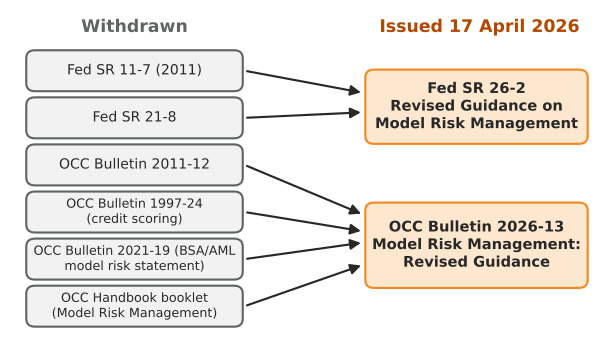
Figure 1. The documents withdrawn and what replaced them. Illustration.
What the new guidance says it is for
The agencies describe the revision as a risk-based approach to model risk management, tailored to a bank’s model risk profile and the size and complexity of its operations. The Fed’s letter says the revision reflects supervisory experience and industry feedback accumulated over the past fifteen years.
The guidance is expected to be most relevant to banking organisations with more than 30 billion dollars in total assets. For smaller banks, it says models are typically subject to internal practices appropriate to their size and risk profile, though the guidance may still be relevant where a smaller bank has significant exposure to model risk. The OCC bulletin adds that the guidance is applicable to all community banks, subject to the limitations discussed in the guidance. In a footnote it also refers to its earlier Bulletin 2025-26, which said that the OCC’s model risk management guidance does not require community banks to perform annual model validation.
It says it sets no enforceable standards
The guidance says it “does not set forth enforceable standards or prescriptive requirements”, and that non-compliance with it will not result in supervisory criticism. It adds that supervisory action may still follow from violations of law or from unsafe or unsound practices that stem from insufficient management of model risk. In our reading: the document is not a checklist an examiner can cite against you, but weak model risk management can still be a finding.
Structure
The guidance has seven sections: introduction, purpose and scope, an overview of model risk, model development and use, validation and monitoring, governance and controls, and vendor and other third-party products. Figure 2 shows them in order, with what each one is for.
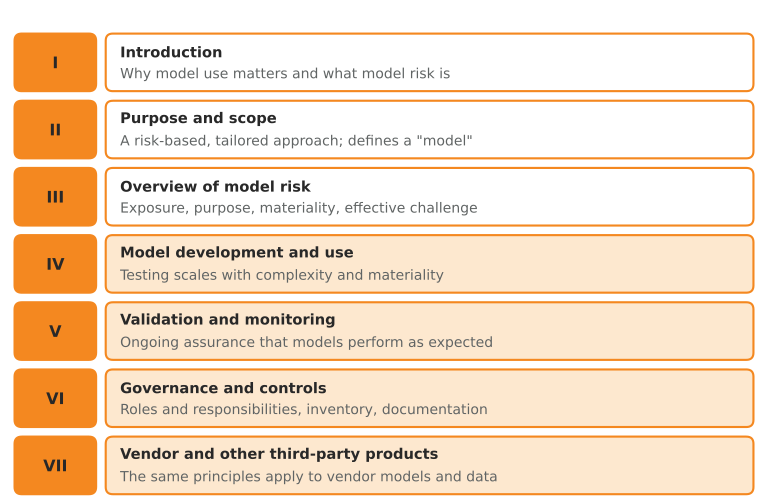
Figure 2. The seven sections of the guidance and what each covers. Illustration.
The familiar ideas remain: effective challenge, validation with sufficient independence, ongoing monitoring, a model inventory, documentation and vendor model oversight. The emphasis moves from uniform procedure to proportionality.
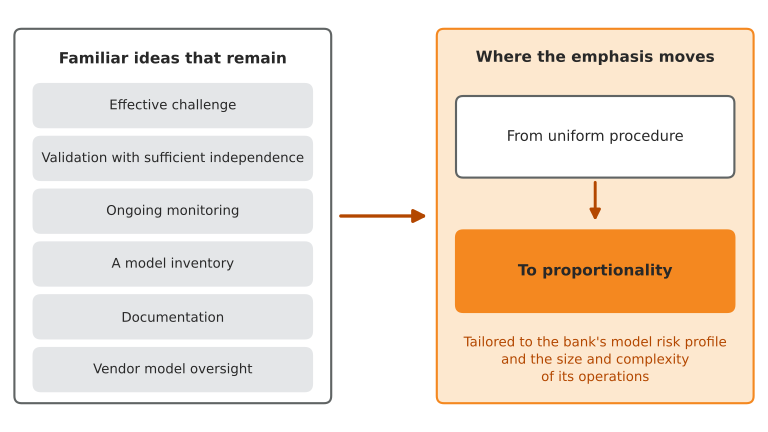
Figure 3. What stays and what shifts in emphasis. Our interpretation.
One part of the overview is worth knowing before you read the rest. The guidance says model purpose, together with model exposure, determines model materiality, and it describes effective challenge as critical analysis conducted by objective experts who evaluate model risk. Those two ideas run through the later sections on development, validation and governance.
What it leaves out
Generative AI and agentic AI models are expressly outside its scope. A footnote calls them novel and rapidly evolving, and says a bank’s own risk management and governance practices should guide controls for tools the document does not cover. The principles apply to traditional statistical and quantitative models and to non-generative, non-agentic AI models. The OCC adds that the agencies plan a request for information on model risk management generally and on banks’ use of AI, including generative and agentic AI. We look at that gap in a separate article.
Does the guidance apply to your model?
The guidance also draws a line around what counts as a model: a complex quantitative method, system or approach that applies statistical, economic or financial theory to turn input data into quantitative estimates. Simple spreadsheet arithmetic and deterministic rule-based processes that apply no such theory are outside the definition. Figure 4 puts the scope statements in one decision path. It is a simplified reading, so check the text of the guidance for your own case.
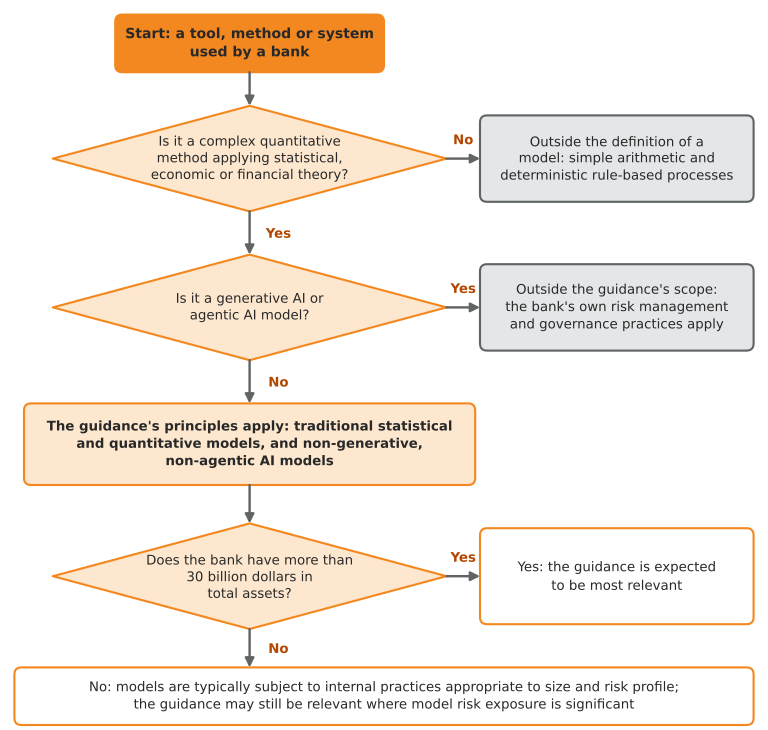
Figure 4. Does the guidance apply to a given tool or model? A simplified reading of the scope statements. Our interpretation.
What this means in practice
This section is our interpretation. Proportionality moves judgement from the regulator to the bank, so you need to be able to explain why your approach is right for your models. Update references in model risk policies, and review how you decide which models are material, because the guidance ties effort to materiality and does not prescribe tiers. Evidence still matters: a risk-based approach is only defensible if validation, monitoring and decisions are documented.
Sources
- Federal Reserve, SR 26-2, Revised Guidance on Model Risk Management, 17 April 2026
- Federal Reserve, Supervisory Guidance on Model Risk Management
- OCC Bulletin 2026-13, Model Risk Management: Revised Guidance
Checked against these pages on 24 November 2026. This article is general information, not legal advice.