
A Practical Model Risk Checklist After SR 26-2
The 2026 interagency guidance (SR 26-2 and OCC Bulletin 2026-13) is shorter on prescription and longer on judgement than SR 11-7 was. That makes a written, repeatable approach more important, not less. Below is a checklist for a model risk team, grouped around the guidance’s main themes. The quotations come from the guidance; the checklist items are our interpretation.
Figure 1 shows how the seven areas fit together. Six of them follow the life of a model, from knowing what you have to governing it. The seventh, vendor and third-party models, applies at every step because the guidance says the same principles apply to vendor products.
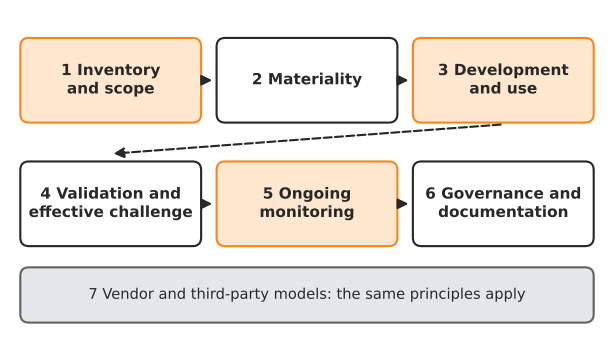
Figure 1. The seven areas of the checklist. Illustration.
1. Inventory and scope
The guidance says an effective inventory “includes sufficient information to understand model risks”. It does not fix the fields, and depth may vary with complexity and use.
- Is every model, including vendor and spreadsheet-based ones above the simple-arithmetic line, recorded?
- Does each entry show purpose, owner, users, data sources, and the decisions the model feeds?
- The guidance defines a model as a complex quantitative method applying statistical, economic or financial theory, and excludes simple arithmetic calculations and deterministic rule-based processes that apply no such theory. Have you documented how you apply that boundary?
2. Materiality
Materiality is set by exposure and purpose. The guidance does not prescribe tiers, so your tiering logic is yours to defend. Figure 2 shows the two inputs. Exposure is how significant the model’s output is to business decisions, which can be measured quantitatively, for example by portfolio size. Purpose is a qualitative factor: models developed to help meet regulatory requirements or manage financial risk exposures are generally considered higher risk.
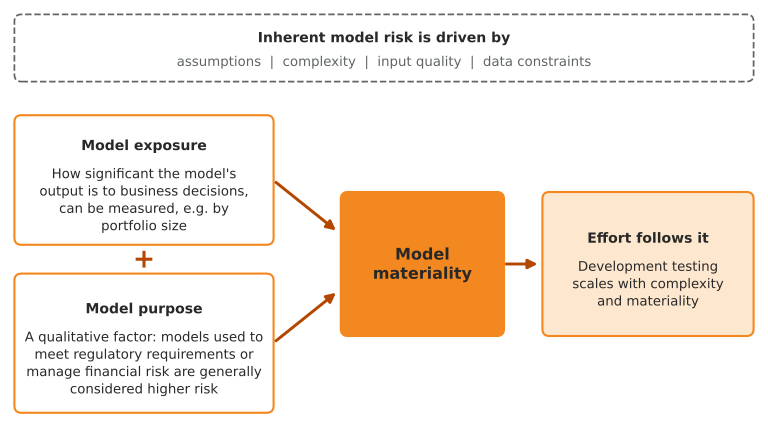
Figure 2. How exposure and purpose determine materiality, and what follows from it. Illustration.
- Is the tiering rule written down, with the reasons for each threshold?
- Are models judged immaterial still identified and watched for changes in use that would make them material?
3. Development and use
The guidance expects development to follow a clear statement of purpose and testing to scale with complexity and materiality. It also says that extending a model beyond its original application calls for additional analysis of the new use and its limitations, and a review of existing controls.
- Does testing match the complexity and materiality of the model?
- Are limitations recorded and communicated to the people who use the output?
- Is there a check when a model is reused for a purpose it was not built for?
4. Validation and effective challenge
The guidance asks for effective challenge with “sufficient independence to maintain objectivity”. It also notes that validation quality “depends on the rigor and effectiveness of the review rather than on organizational structure”. It describes effective challenge as critical analysis by objective experts, and says reviewers need expertise, independence and the standing to effect change. Validation looks at conceptual soundness (design, assumptions, data selection and developmental evidence) and at outcome analysis, which compares outputs with real-world results, for example by back-testing.
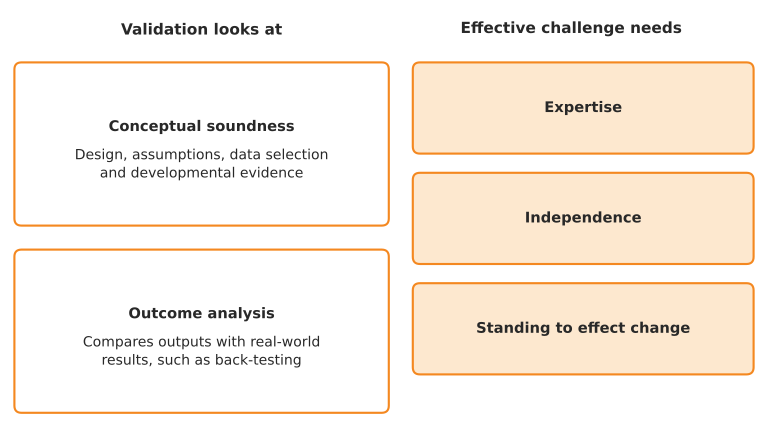
Figure 3. What validation examines and what effective challenge needs. Illustration.
- Can you show that reviewers had the independence and competence to challenge the developers?
- Are incentive conflicts between development and validation reporting lines identified and managed?
- Are validation findings tracked to closure, with exceptions recorded?
- Does validation happen before first use? The guidance says it generally should, and that urgent needs may allow earlier use with added controls. If you use that route, is it recorded as an exception?
5. Ongoing monitoring
Monitoring checks whether a model “is performing as expected given potential changes in products, exposures, activities, clients, data relevance, or market conditions”. Figure 4 shows monitoring as part of a loop rather than a one-off step: a breach should lead to a decision, and a decision that changes the model sends it back through testing.
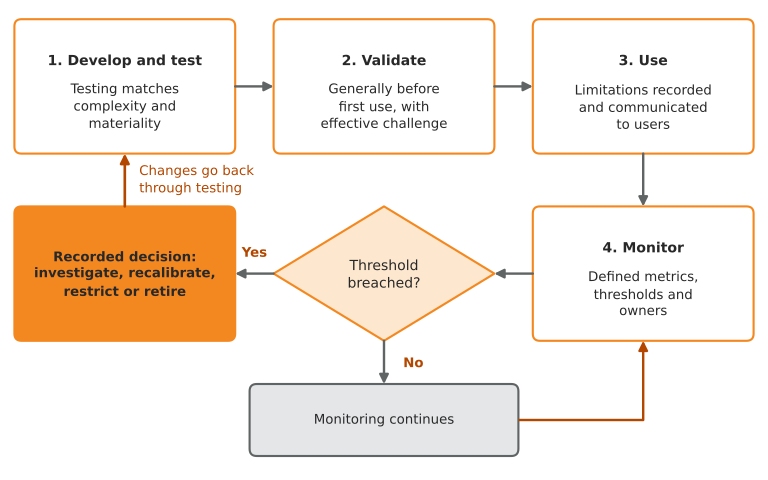
Figure 4. A lifecycle loop for validation, monitoring and escalation. Our interpretation.
- Are there defined metrics, thresholds and owners for each material model?
- Does a breach trigger a recorded decision (investigate, recalibrate, restrict, retire)?
6. Governance and documentation
The guidance pays attention to conflicts of interest, such as misaligned reporting lines between developers and validators, and says internal audit evaluates the framework rather than duplicating development or validation work.
- Are roles and responsibilities written down, including who can approve a model for use?
- Does documentation let someone who did not build the model understand and reproduce it?
7. Vendor and third-party models
The guidance says the principles of model risk management “remain applicable” to vendor products. It adds that validation may be done internally or by outside parties, and that sound practice includes documenting, justifying and evaluating customisations as part of validation.
- Do you validate vendor models, or have them validated, and monitor them in use?
- Are customisations documented and justified?
A note on evidence
Under a risk-based approach, what protects you is the record: why a model was tiered as it was, what validation concluded and what was done about it. Keeping the inventory, validation results and monitoring together makes that record easier to keep. SLERA (StratLytics Enterprise Risk Analytics) has model lifecycle modules (Build, Govern, Monitor) for this area of work.
Sources
- Federal Reserve, Supervisory Guidance on Model Risk Management (SR 26-2)
- Federal Reserve, SR 26-2, Revised Guidance on Model Risk Management
- OCC Bulletin 2026-13
Checked on 24 November 2026. General information, not legal advice.