
LLMs in Supply Chain Planning: Where They Help and Where They Should Not Decide
Generative AI is arriving in supply chain planning, in the form of assistants that summarise exceptions, draft supplier messages and answer questions about plans in plain language. Used well, they save planners time. Used carelessly, they put confident but unchecked text between a planner and a decision. The useful question is where each tool belongs.
Where LLMs help
- Reading and summarising. Condensing supplier emails, shipping notices and exception reports so a planner sees what changed.
- Asking questions of data. Letting a planner query plans and history in plain language, with the answer traceable to the underlying numbers.
- Drafting. First drafts of supplier communications and meeting notes, always reviewed by a person.
- Explaining. Describing in words why a forecast or a recommendation changed.
Where they should not decide
Demand forecasting, inventory optimisation and network design are numerical problems with measurable error. They are better served by statistical and optimisation methods that can be tested against outcomes. An LLM may help you read the result, but it should not be the thing producing the number you commit money to.
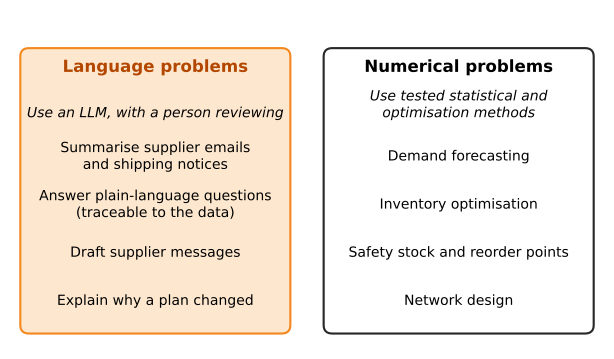
Figure 1. Matching the tool to the problem. Illustration.
Match oversight to what the output can commit
Not every use of a language model carries the same risk. A useful way to sort them is by two questions: what can the output commit the business to, and how much of it does a person review before it is used? A summary of meeting notes commits nothing, so a spot check is enough. A draft supplier message can commit terms once it is sent, so a person should read all of it. Output that commits stock, spend or supplier terms with only a light check is the combination to avoid.
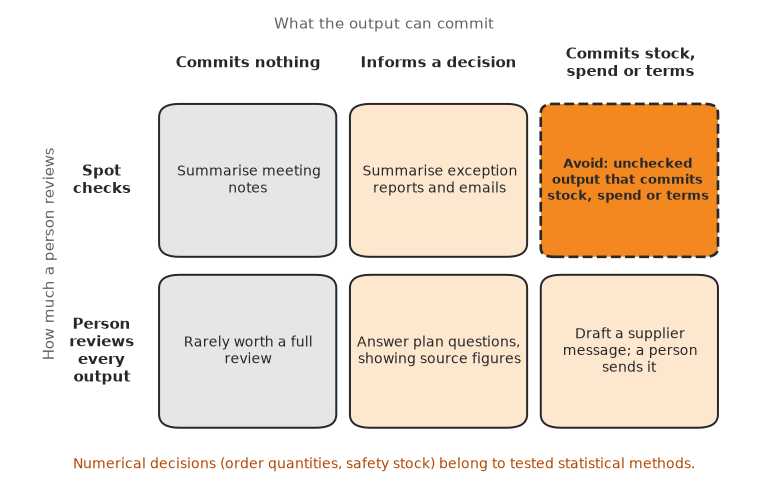
Figure 2. Oversight should rise with what the output can commit. The placements are examples, not a standard. Illustration.
In our view, the placement of each use in your own organisation is a decision for the people who carry the risk. Write it down, and revisit it when the use changes. If a summary that began as background reading starts to drive orders, it has moved to the right in the matrix, and the review should move down with it.
A human-in-the-loop workflow
Take a common case: a supplier emails to say a delivery will be late. A language model can condense the message into a few lines. The summary is only useful if it is tied to your own data, so the workflow retrieves the relevant orders, stock and plan figures and shows them next to the generated text. The planner compares the two, decides what to do, and acts. The action and the review are logged, so that the decision can be explained later. When the planner finds an error, the case is added to the test set described below.
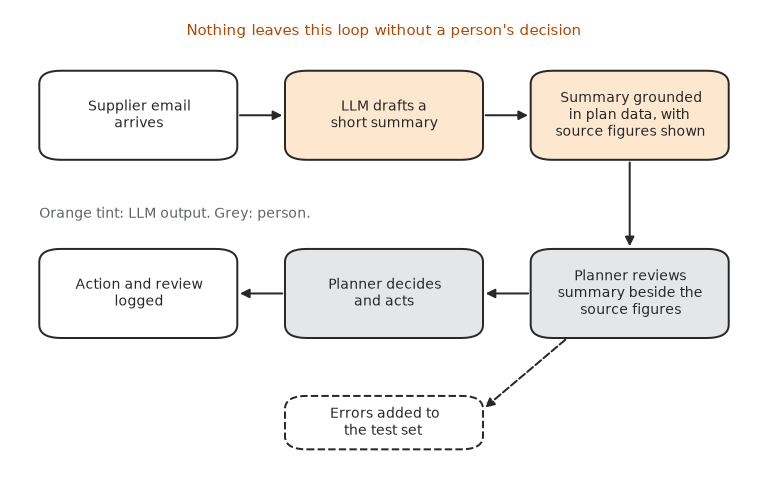
Figure 3. A summary workflow in which the person, not the model, makes the decision. Illustration.
Guardrails that matter
- Ground answers in your data, and show the source figures beside any generated statement.
- Evaluate on your own cases before use and after each change of model or prompt: keep a fixed set of past exceptions, supplier messages and planner questions with known correct answers, and rerun it each time.
- Keep a person accountable for any action that commits stock, spend or supplier terms.
- Control what leaves the building. Supplier terms and costs are commercially sensitive. Decide what may be sent to a vendor.
- Watch for vendor change. A model update can shift behaviour without notice.
Evaluating on your own cases
In our view, general benchmarks say little about how a model handles your supplier emails and your exception reports. Build a test set from real past cases: each with the input, the correct summary or answer, and a note on what a good response must contain. Score the model’s responses against it, and repeat the exercise whenever the model, the prompt or the data connection changes. Compare the new scores with the old ones before adopting the change. Scoring can be done by a person for a small set; if you use another model to help score, spot check its judgements against a person’s. Add new failures to the set as they appear, so that it grows with experience.
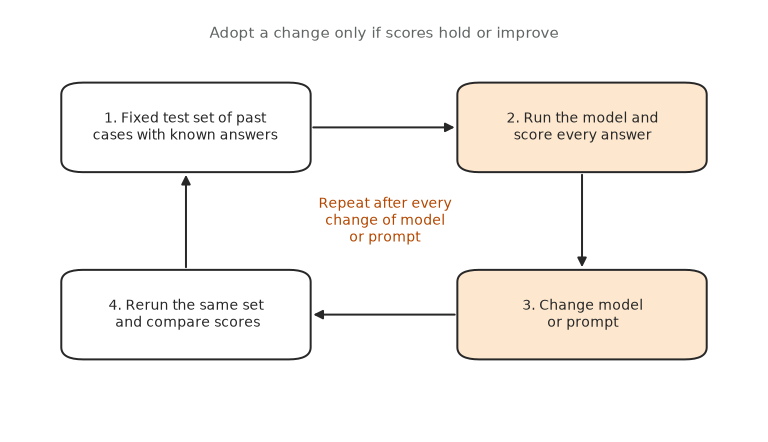
Figure 4. An evaluation loop: change one thing, rerun the same cases, compare. Illustration.
The NIST AI Risk Management Framework has a generative AI profile (NIST AI 600-1, released July 2024) that is a useful checklist for these risks, and the framework itself is voluntary.
What to look for when reviewing output
Language models can produce fluent text that is wrong. In a planning setting, three failures are worth checking for in every review and every test case: a figure that does not match the source data, a caveat from the original message that the summary leaves out (a conditional delivery date, for example), and a confident tone around something the data does not support. In our view, a reviewer who knows these patterns is better placed to catch them. They are also a good basis for scoring, because each one can be marked as present or absent.
The principle
Keep the arithmetic where it can be tested, and use language models where language is the problem. A supply chain decision should always be traceable to a number, an assumption and a person.
Sources
Checked on 24 November 2026.