
FSB Sound Practices for AI: What Financial Institutions Should Take From It
On 15 October 2026 the Financial Stability Board (FSB) published its final report, “Sound Practices for Responsible Adoption of Artificial Intelligence (AI)”. It follows a consultation report of 10 June 2026. The FSB is an international body and the report is not binding: it sets out practices that financial institutions are “encouraged to consider”, and boards and senior management are “strongly encouraged to reference” them.
What it contains
The report sets out 12 sound practices in two groups: organisation-wide AI governance, and a framework for managing AI risk across the lifecycle from development to deployment. It explicitly covers generative and agentic AI. The first four practices are cross-cutting governance practices. The other eight cover the AI lifecycle.
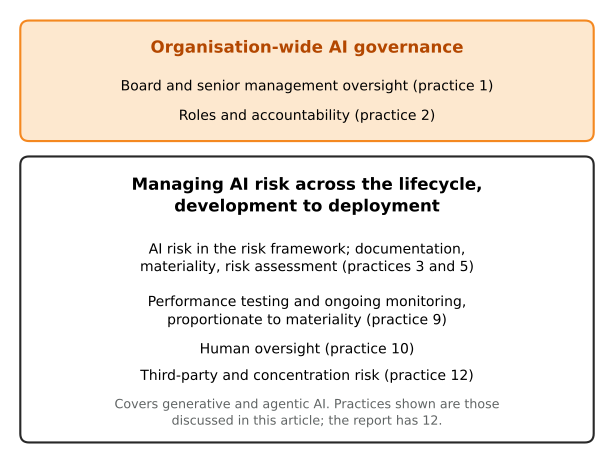
Figure 1. How the FSB practices are organised. Illustration; only the practices discussed here are shown.
All twelve practices
Figure 2 lists every practice with its number and title as they appear in the report’s annex. Practices 1 to 4 sit in the governance group. Practices 5 to 10 relate to certain stages of AI development and deployment. Practices 11 and 12, on cyber and ICT risk and on third-party AI risk, apply across all stages.
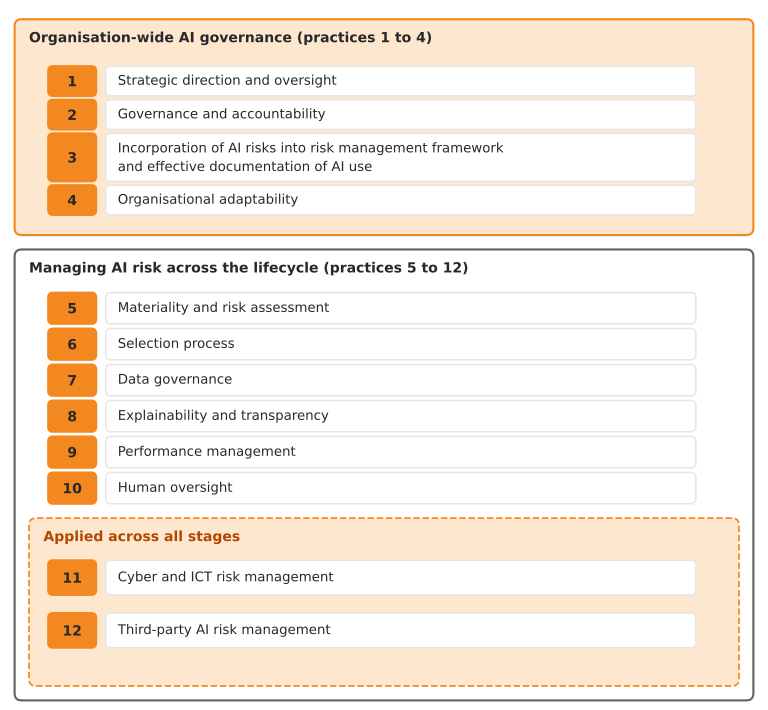
Figure 2. The 12 sound practices, with titles as in the report. Illustration.
Those most relevant to model risk teams include:
- Board and senior management oversight of AI (practice 1) and defined roles and accountability (practice 2).
- AI risk integrated into the institution’s existing risk framework, with documentation of AI use, a materiality view and a risk assessment (practices 3 and 5).
- Performance evaluation, testing and ongoing monitoring proportionate to materiality (practice 9).
- Human oversight (practice 10).
- Third-party AI risk, including concentration and business continuity (practice 12).
Three other practices deserve a second look from teams used to conventional models. Practice 7 asks for data governance that keeps data fit for purpose for training, testing and using AI, meaning accurate, complete, consistent, reliable and secure. Practice 8 asks institutions to understand differences in the explainability of various types of AI and, where appropriate and feasible, to adopt more explainable AI or consider compensating controls, with transparency tailored to different stakeholders. Practice 11 asks institutions to manage AI-related cyber and ICT risks, including, where appropriate, by incorporating AI cyber and ICT risk scenarios into tests and exercises, sharing relevant information and using AI tools in cyber and ICT risk management.
The lifecycle behind practices 5 to 12
Practices 5 to 12 refer to an AI lifecycle. The report gives an illustrative lifecycle of seven stages, from inception to retirement, and notes that there are no standard, one-size-fits-all stages: institutions may use their own. The stages in Figure 3 are the report’s example. Our interpretation: they map onto ideas a model risk team already uses, such as validation, monitoring and periodic review.
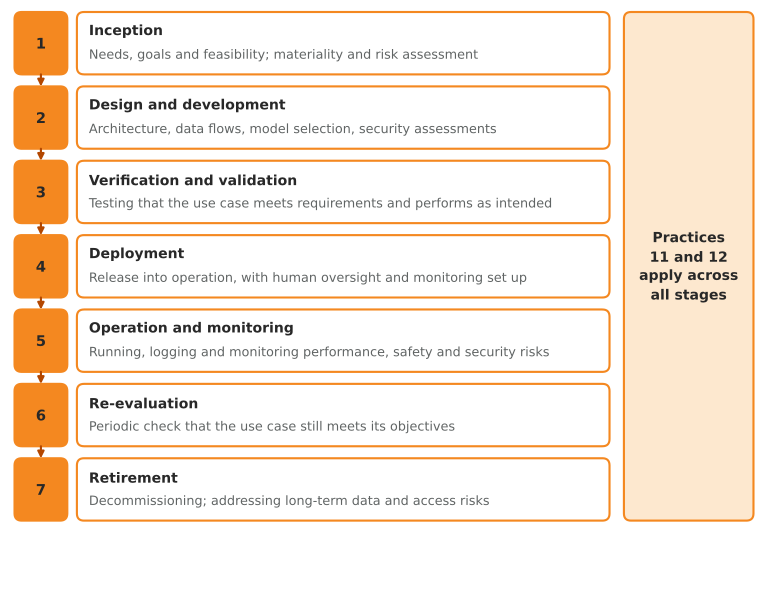
Figure 3. The illustrative AI lifecycle in the report, in the report’s own stage names. Illustration.
Why it matters
Several things stand out. First, it treats AI risk as part of enterprise risk management, not as a separate technology topic. Second, it scales expectations to materiality, which is the same idea as the 2026 US model risk guidance. Third, it deals with generative and agentic AI directly, which the US guidance (SR 26-2) leaves out of scope. Institutions that operate across borders can use it as a common reference.
Proportionality
The report says institutions should consider proportionality when applying the practices. More robust practices may be appropriate for institutions that are large, complex or highly connected within their ecosystem, and where AI is used or deployed in critical functions. Smaller, less complex or less interconnected institutions, and less material or lower risk use cases, may warrant applying only the relevant practices or an appropriate modification of them.
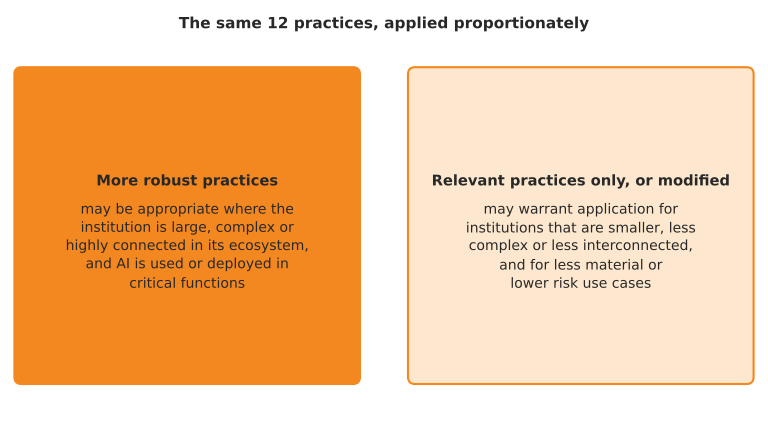
Figure 4. How the report describes proportionate application. Illustration.
How to use it
Our interpretation: map your existing model risk framework against the 12 practices. Most institutions will find that inventory, validation and monitoring cover much of the ground for conventional models, and that the gaps lie in generative AI, in third-party concentration and in senior management reporting.
Sources
- FSB, Sound Practices for Responsible Adoption of AI: Final report, 15 October 2026
- FSB, Final report (PDF)
- FSB, Consultation report, 10 June 2026
Checked on 24 November 2026. General information, not legal advice.