
EU AI Act: High-Risk Rules for Credit Scoring Moved to 2 December 2027
Many lenders planned for 2 August 2026 as the date when the EU AI Act’s rules for high-risk AI systems would start to apply. That date has moved. Regulation (EU) 2026/1744, the Digital Omnibus on AI, was signed on 8 July 2026, published in the Official Journal on 24 July 2026 and entered into force on 27 July 2026.
The new dates
As amended, Article 113 of the AI Act sets:
- 2 December 2027 for AI systems classified as high-risk under Article 6(2) and Annex III.
- 2 August 2028 for systems classified as high-risk under Article 6(1) and Annex I, which covers AI embedded in regulated products.
Annex III is the list of stand-alone high-risk uses. Point 5(b) covers AI systems intended to be used to evaluate the creditworthiness of natural persons or establish their credit score, with the exception of AI systems used for detecting financial fraud. Credit scoring and creditworthiness systems for individuals that meet the Act’s definition of an AI system are therefore likely to be high-risk from 2 December 2027. Whether a given model is in scope, and whether the lender’s duties are those of a provider or a deployer, needs a case-by-case assessment. Article 6(3) allows narrow exceptions for some Annex III systems, but not where the system performs profiling of natural persons. Point 5(b) refers to natural persons, not companies; note that scoring sole traders, partners or personal guarantors can still involve natural persons.
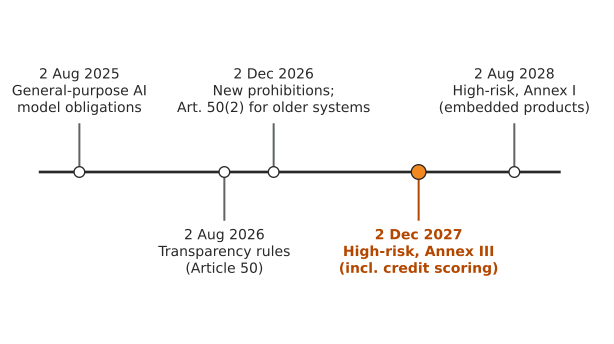
Figure 1. Key AI Act application dates after the Digital Omnibus. Illustration based on the sources below.
Is a credit model high-risk, step by step
The Commission’s AI Act Service Desk reproduces Annex III as the list of AI systems that are high-risk under Article 6(2). Point 5 falls under access to and enjoyment of essential private services and essential public services and benefits. Reading the steps in order gives a short test: first, does the system meet the Act’s definition of an AI system; second, is it intended to evaluate the creditworthiness of natural persons or establish their credit score; third, is it used for the purpose of detecting financial fraud, which point 5(b) excludes. An AI system intended for that purpose and not used for detecting financial fraud is likely to be high-risk.
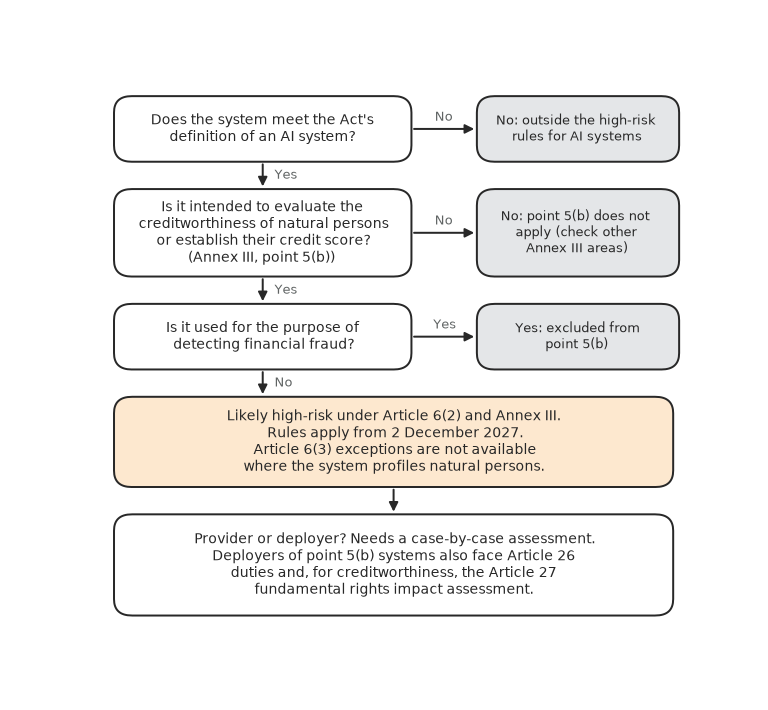
Figure 2. A first-pass screening flow for point 5(b). Our interpretation of Annex III and Article 6, not legal advice.
The flow ends with a question it cannot answer for you. Whether your organisation is a provider or a deployer of a given system needs a case-by-case assessment, because the duties differ between the two roles. Settle that question for each in-scope model, and record how you reached the answer, before December 2027 planning is finalised.
What did not move
The Omnibus did not delay everything. Under Article 113, the Article 50 transparency rules have applied since 2 August 2026. The Omnibus also gives providers of generative systems placed on the market before 2 August 2026 until 2 December 2026 to comply with the Article 50(2) marking duty. General-purpose AI model obligations have applied since 2 August 2025. The Omnibus also adds new prohibitions, which apply from 2 December 2026. The AI literacy duty in Article 4 has applied since 2 February 2025; the Omnibus rewrote it as a duty on providers and deployers to take measures to support the AI literacy of their staff. Data protection rules on automated decision-making already apply to credit scoring. From December 2027, deployers of point 5(b) systems also face Article 26 duties and, for creditworthiness, the fundamental rights impact assessment in Article 27.
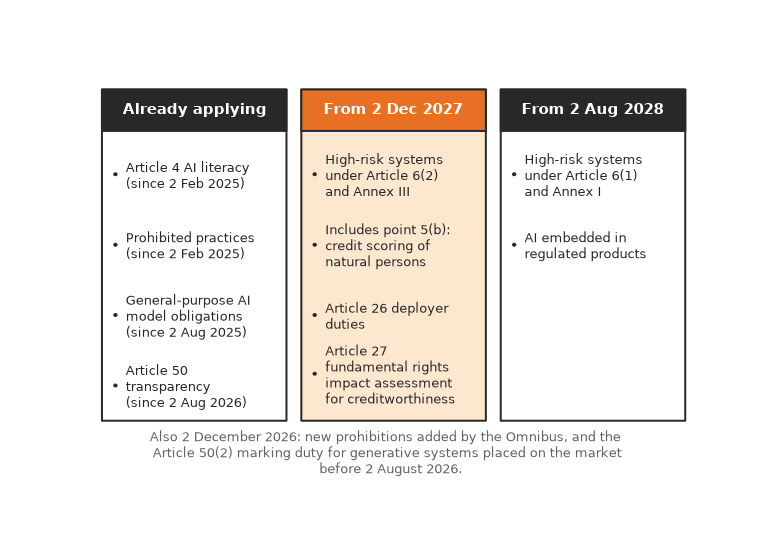
Figure 3. What already applies, what starts on 2 December 2027 and what starts on 2 August 2028. Illustration based on the sources below.
Our reading of Figure 3: a lender is not starting from zero, because the AI literacy duty and the prohibitions already apply. What arrives in December 2027 is the set of high-risk obligations for Annex III systems, which includes point 5(b). The August 2028 date concerns AI embedded in regulated products under Annex I, a different route into the high-risk category from the stand-alone Annex III list.
Why the extra time is not slack
High-risk obligations include risk management, data governance, documentation, record-keeping, human oversight, accuracy and robustness. Those are, in substance, model risk management disciplines. A lender that already keeps a model inventory, validates independently and monitors for drift is much of the way there; a lender that does not will find the time between now and December 2027 short.
What to do with the time
Our suggestions, not regulator requirements: map which models are in scope (credit decisioning, limit setting, pricing that affects access to credit); check that documentation could be shown to a supervisor; confirm you can explain individual decisions; and set up monitoring that produces evidence rather than only alerts.
These dates are set in law but could be amended again by further EU legislation; check the consolidated text before planning.
Sources
- Regulation (EU) 2026/1744, EUR-Lex
- European Commission AI Act Service Desk, Annex III
- European Commission AI Act Service Desk, Article 6
- European Commission, AI Omnibus enters into force
- European Commission, AI Act regulatory framework
Checked on 24 November 2026. General information, not legal advice.